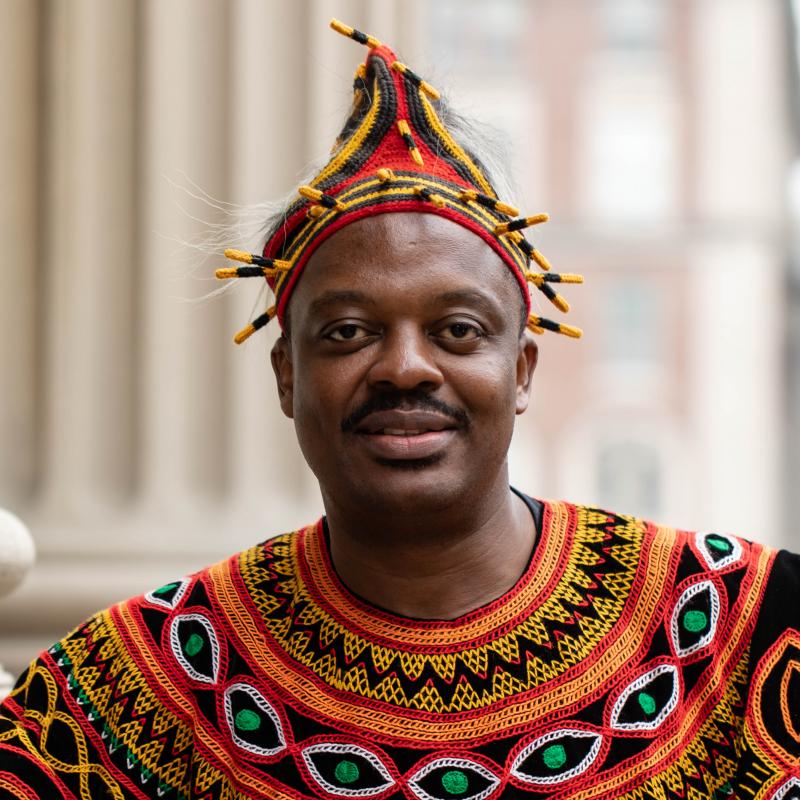

In a country of more than 24 million people with fewer than 50 cardiologists, heart disease accounts for 12 percent of all deaths in Cameroon. For decades, rural patients faced a grim choice: undertake expensive, often dangerous journeys to urban specialists, or go undiagnosed. Arthur Zang, a computer engineer from Mbankomo, near Yaoundé, set out to change that equation entirely.
From Rejection to Reinvention
Born in 1987, Zang grew up dreaming of becoming a doctor. When medical school rejected his application, he pivoted to computer science at the École Nationale Supérieure Polytechnique in Yaoundé. The redirection proved decisive. During a 2009 internship at the General Hospital of Yaoundé under cardiologist Professor Samuel Kingue, he encountered firsthand the catastrophic shortage of cardiac specialists across Central Africa. Rural patients, he learned, were not simply inconvenienced by the lack of local care — they were dying because of it. The death of his uncle from a stroke while he was still developing his prototype added a deeply personal dimension to his mission. "That pushed me to finish the device," Zang later said.
The Cardiopad: Africa's First Medical Tablet
Launched in 2016, the Cardiopad is a handheld touchscreen tablet that enables non-specialist healthcare workers in remote villages to perform electrocardiograms. Electrodes are placed on the patient and connected to the device, which digitises the heart signal and transmits it via a 3G mobile network to a cardiologist in a major city. A diagnosis can be returned to the remote site within 20 minutes. Zang taught himself the electronics required to build the tablet's hardware through online courses from the Indian Institute of Technology, supplementing his formal computer science training. Priced at approximately 3,000 US dollars — comparatively low for hospital-grade diagnostic equipment — the Cardiopad was designed from the outset with affordability in mind. Recognising that many smaller health facilities still could not meet that cost, Zang launched a distribution programme in 2017 under which devices are provided free of charge, with patients paying a modest annual fee for access to remote diagnosis from their own communities.
3 more paragraphs