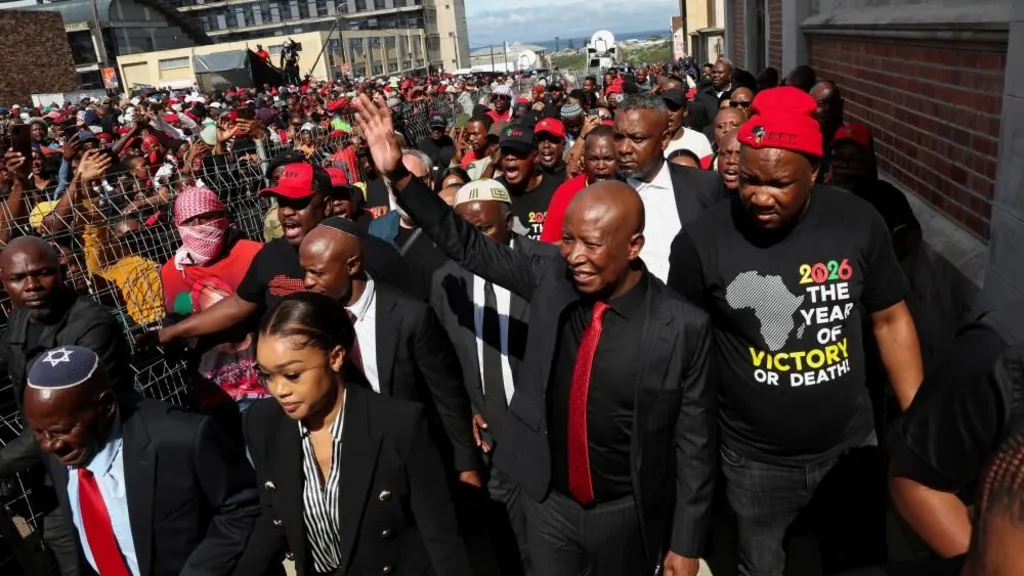
Julius Malema, leader of South Africa's Economic Freedom Fighters and a member of parliament, was on Thursday sentenced to five years in prison after being found guilty of illegally possessing a firearm and discharging it in public. However, Magistrate Twanet Olivier granted Malema leave to appeal the sentence, allowing the 45-year-old politician to walk free from court and continue his political activities while the legal process runs its course.
The charges stem from a 2018 incident in which video footage captured Malema firing a semi-automatic rifle into the air during celebrations marking the EFF's fifth anniversary in the Eastern Cape province. During the trial, held in KuGompo City — formerly known as East London — Malema maintained the shots were fired in celebration. The magistrate rejected that framing, ruling the act was not impulsive but rather a deliberate centrepiece of the evening's event. Olivier also noted that as a public figure with a large national following, Malema bore a particular responsibility to account for his actions.
Political Fallout Delayed by Appeals Process
Should the sentence ultimately be upheld, Malema would be barred from serving as a member of parliament for five years following the completion of any custodial term — a development that could effectively end his current political career. Political analyst Sandile Swana, speaking to the BBC, indicated that the appeals process was likely to extend over several years, meaning the EFF leader faces no immediate threat to his parliamentary seat or party leadership. Malema himself vowed to challenge the conviction all the way to South Africa's Constitutional Court, the country's highest judicial authority.
3 more paragraphs